
Can AI Help in Music Practice? A Balanced View for Students
AI tools can support practice, feedback, and experimentation, but they should assist musical growth rather than replace listening, riyaaz, or a teacher.
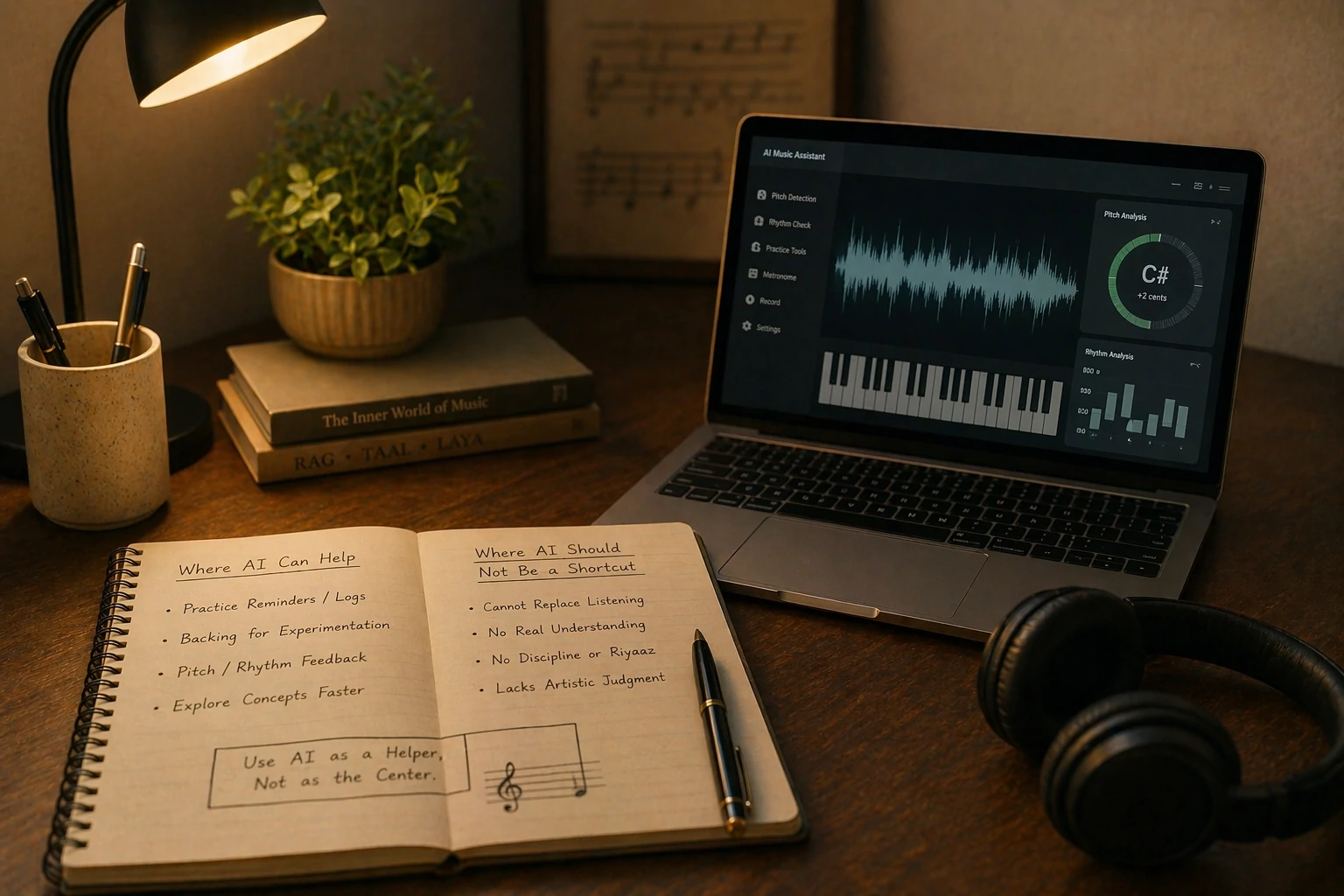
AI can be useful, but it is not the musician
Students are increasingly curious about tools that generate music, analyze pitch, or create backing material. These tools can be genuinely helpful, especially for reference, experimentation, or staying consistent with practice.
At the same time, there is a danger in expecting software to replace musical understanding. Real progress still depends on listening, repetition, correction, and sensitivity.
Where AI can help
- Creating practice reminders or logs
- Generating backing textures for experimentation
- Supporting pitch or rhythm feedback
- Helping learners explore unfamiliar concepts more quickly
Where AI should not become a shortcut
A generated output is not the same as a trained ear. A machine may suggest patterns, but it does not replace the discipline of sur, taal, riyaaz, or artistic judgment.
For students, the healthiest approach is to use AI as a helper and never as the center of the learning process.
“Technology can support musical growth, but it cannot practice sincerely on your behalf.”
Related articles

What Is Sur in Music? A Beginner-Friendly Way to Understand Pitch
A simple introduction to sur, shruti, pitch, and why developing your ear matters more than memorizing theory words.
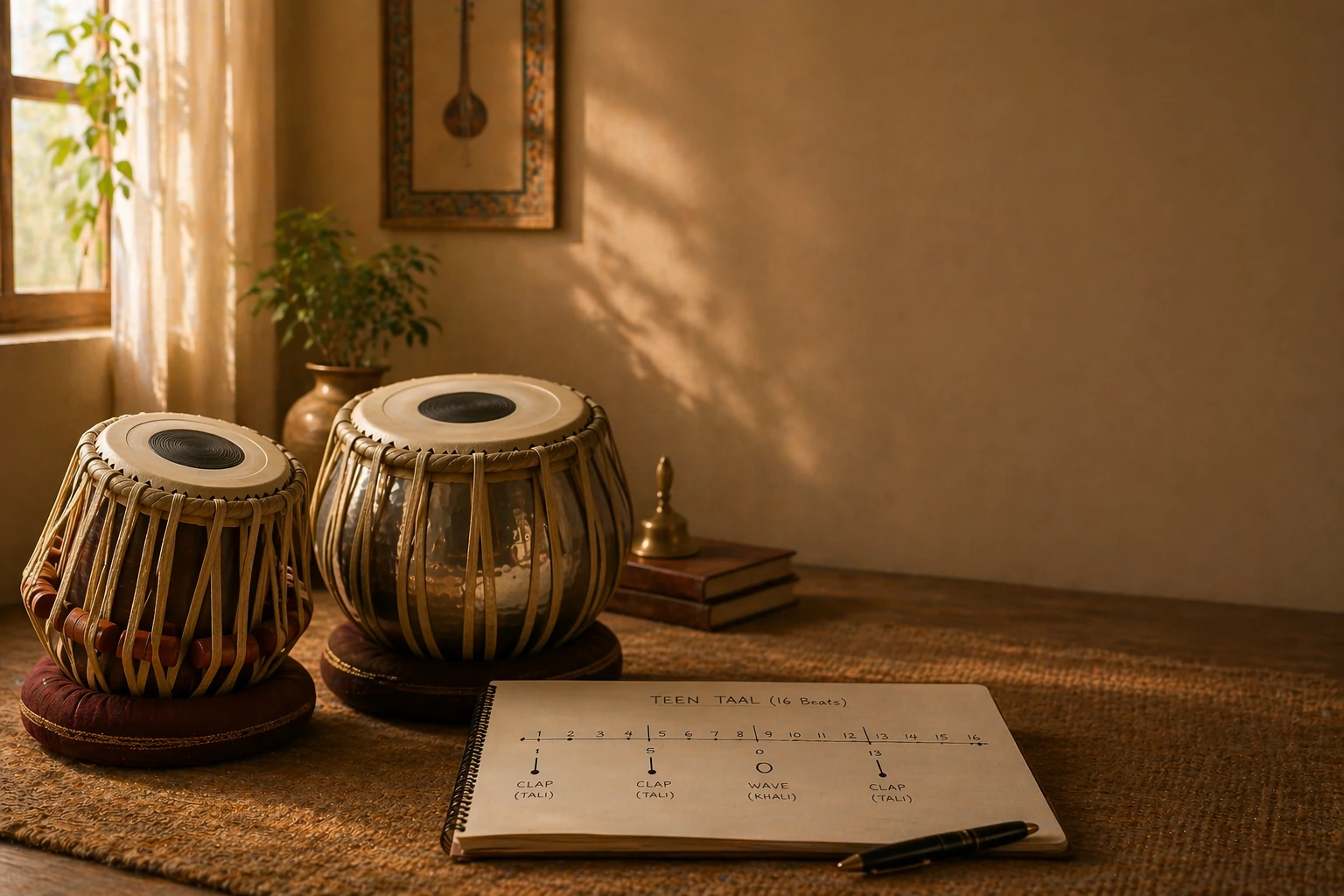
Taal Without Fear: How to Feel the Cycle Instead of Counting Blindly
Taal becomes much easier when students stop treating it like math homework and begin to feel the recurring cycle of movement and stress.
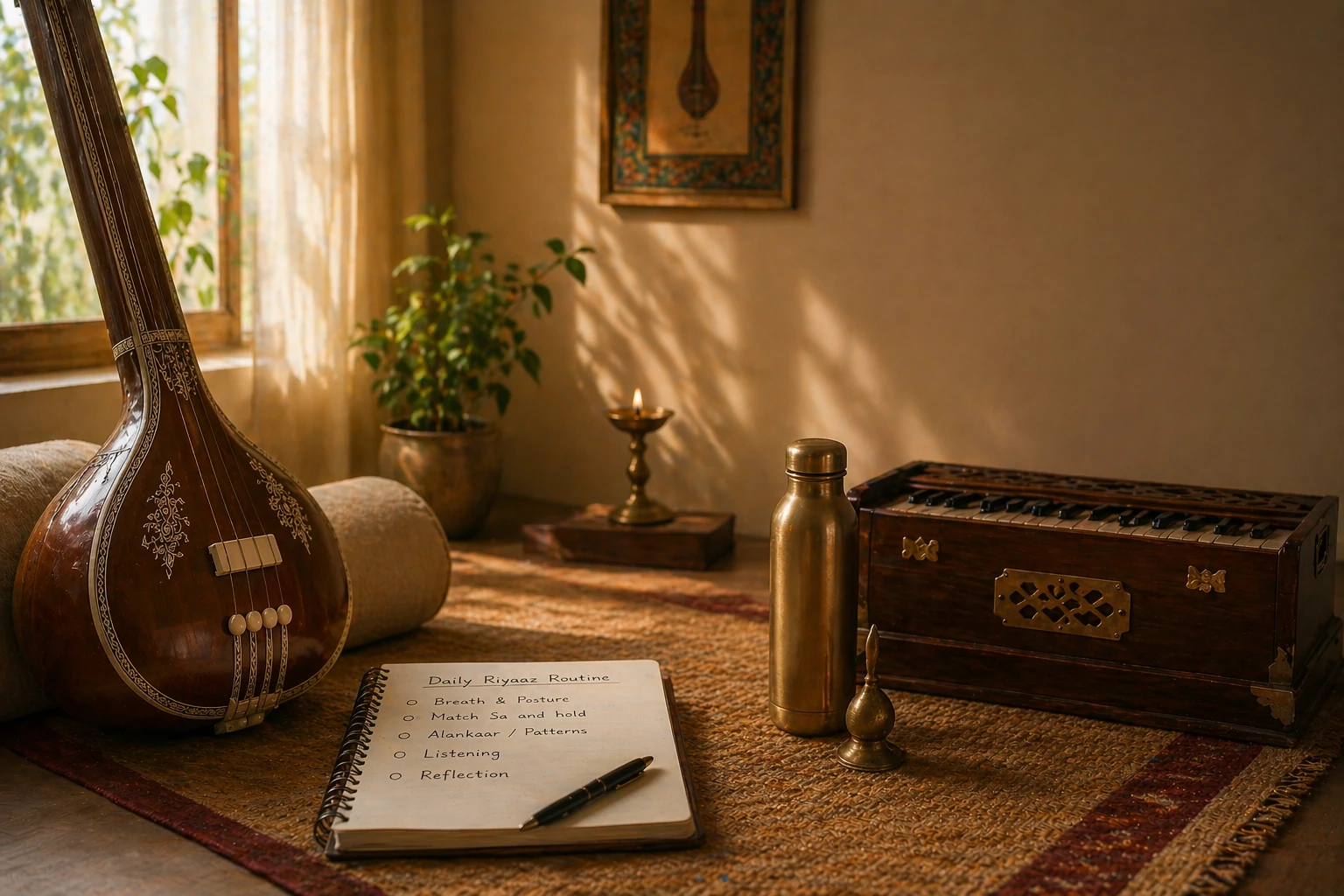
How to Start Riyaaz Without Overcomplicating It
A practical starting point for students who want to build a daily practice habit without turning music into a burden.