
Taal Without Fear: How to Feel the Cycle Instead of Counting Blindly
Taal becomes much easier when students stop treating it like math homework and begin to feel the recurring cycle of movement and stress.
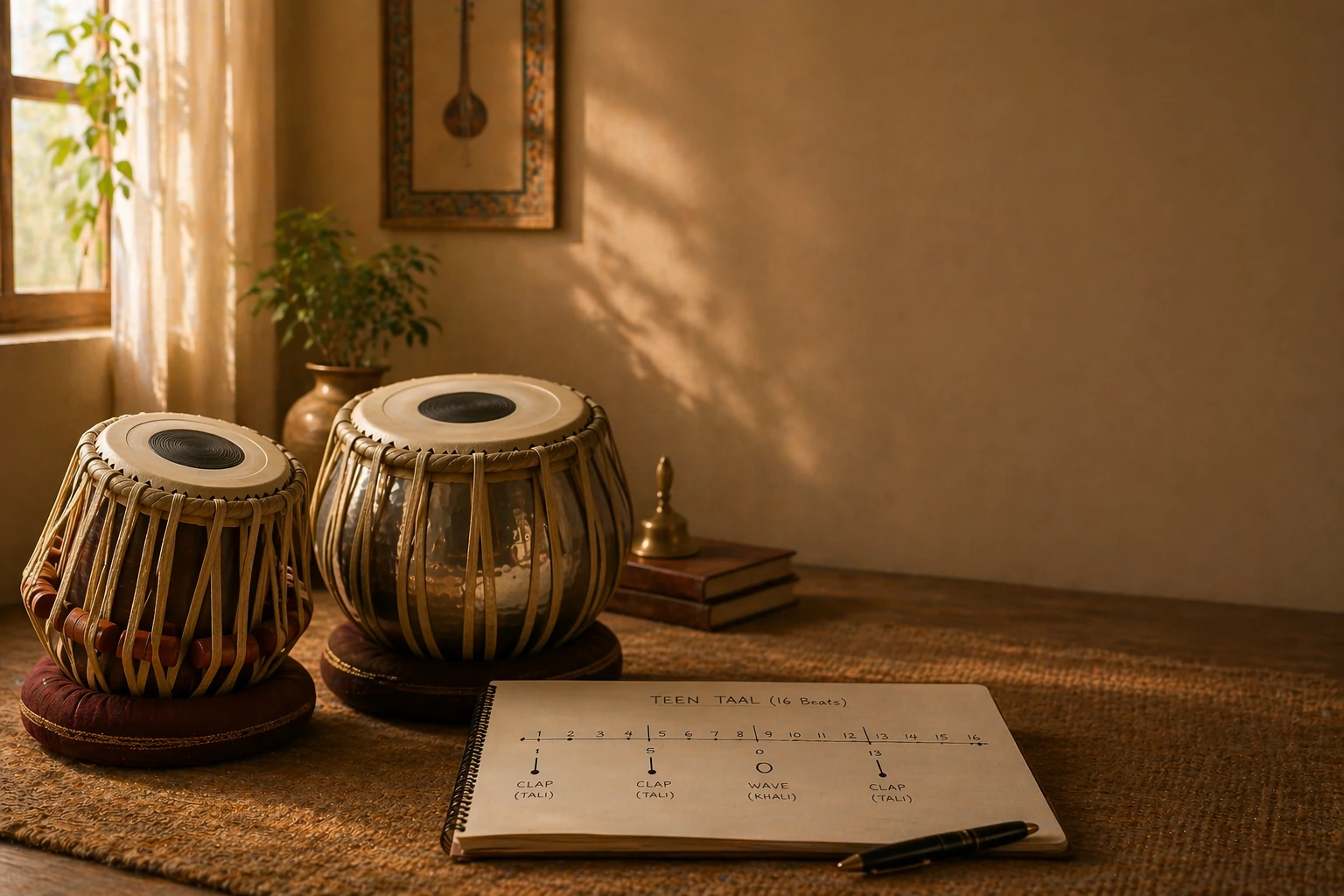
Taal is a cycle, not a straight line
One reason taal feels difficult to beginners is that they try to treat it as a line of numbers: 1, 2, 3, 4, and so on. But in Indian music, taal is circular. It keeps returning home.
The sam gives the cycle its gravity. Once a learner begins to recognize the feeling of departure and return, rhythm becomes more musical and less mechanical.
Clap, wave, and speak before you play
Students often want to jump directly to playing bols on the instrument. But body movement helps rhythm settle faster. Clapping, waving, and reciting bols gives taal a physical shape.
- Speak the bols clearly.
- Mark clap and khali with the hands.
- Repeat slowly until the cycle becomes familiar.
Why rhythm confidence changes everything
When taal becomes steady, singing becomes calmer, accompaniment becomes more musical, and stage confidence improves. A learner who trusts the cycle rarely feels lost for long.
That is why rhythm training is useful not only for tabla or dholak students, but for almost every performing arts learner.
Related articles
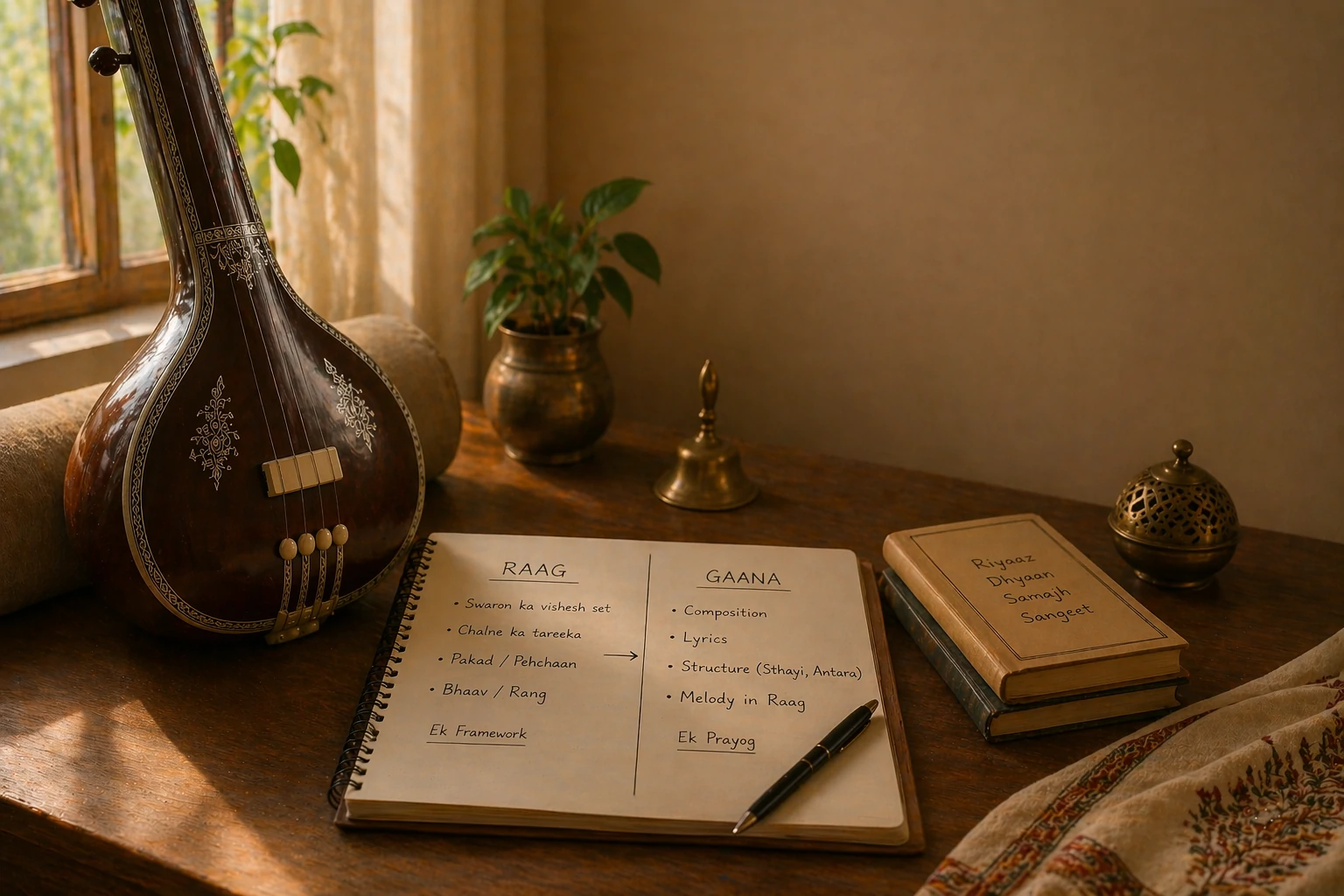
Raag Aur Gaana Ek Hi Baat Nahi Hain
Ek simple Hinglish article jo batata hai ki raag aur gaana mein farq kya hota hai, aur beginners ko is confusion se kaise nikalna chahiye.
What Is Sur in Music? A Beginner-Friendly Way to Understand Pitch
A simple introduction to sur, shruti, pitch, and why developing your ear matters more than memorizing theory words.
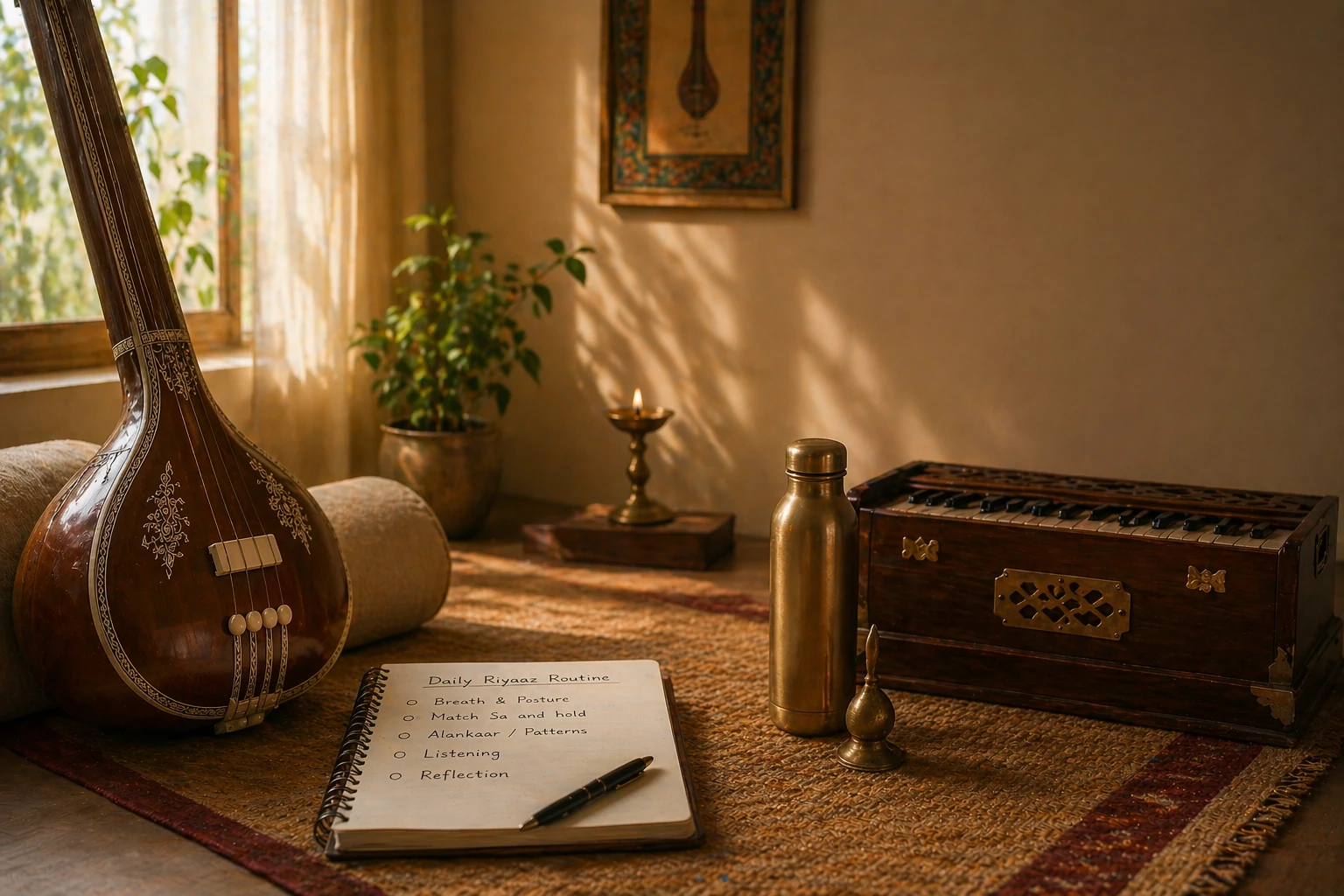
How to Start Riyaaz Without Overcomplicating It
A practical starting point for students who want to build a daily practice habit without turning music into a burden.