
A Beginner’s Guide to Staff Notation Without Intimidation
Staff notation can look scary at first, but the basics become manageable once you understand lines, spaces, rhythm values, and repeated reading.
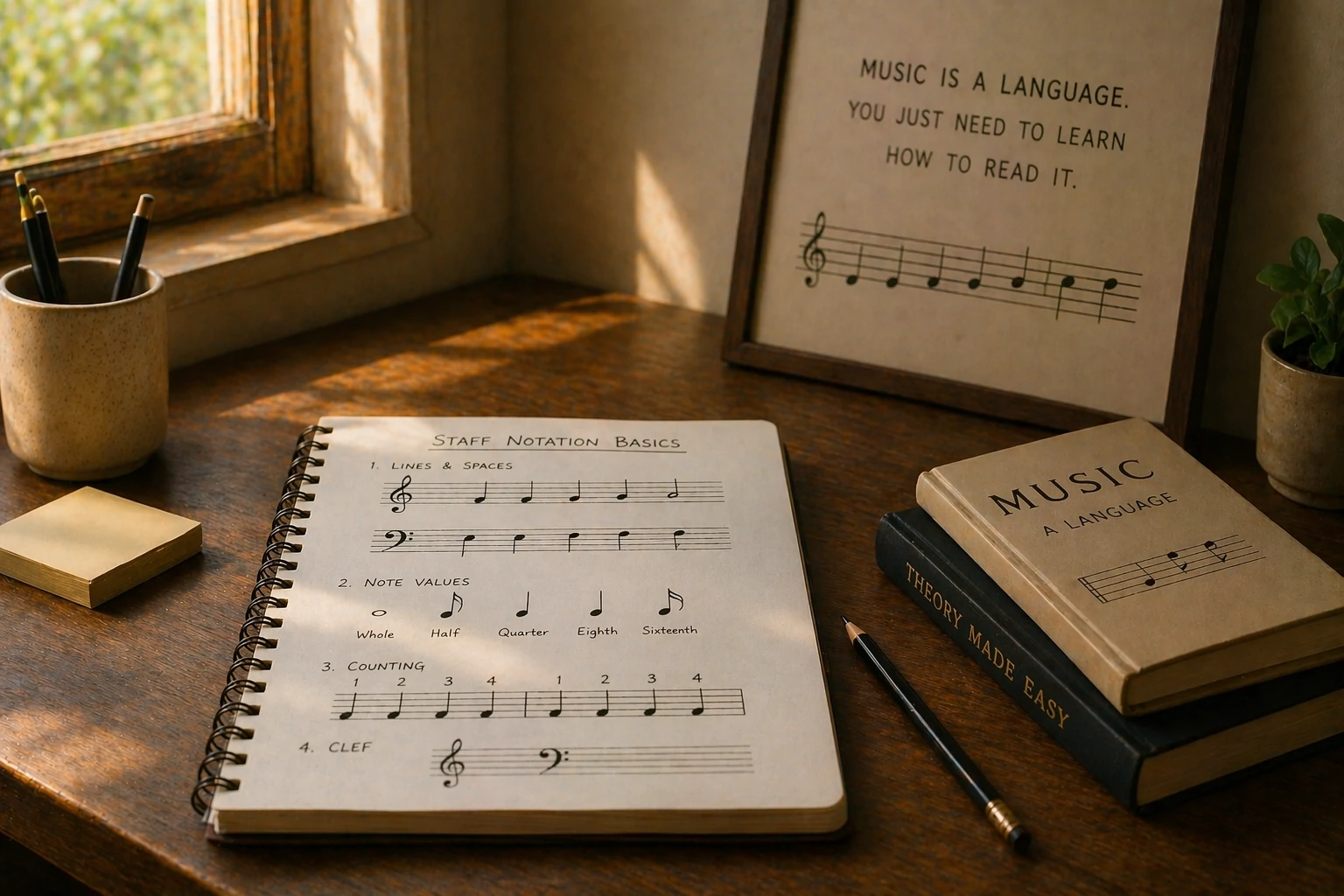
Notation is a reading skill, not a test of intelligence
Students often look at staff notation and assume they are too late to learn it. The truth is much simpler: notation is a reading system, and reading systems become easier through repeated exposure.
Once the learner understands where notes sit and how rhythm symbols behave, the page starts to look far less mysterious.
What to learn first
Trying to master everything at once is unnecessary. If the basics become comfortable, more complex music becomes much easier to approach.
- The idea of lines and spaces
- Treble or bass clef depending on the instrument
- Basic note values
- How counting supports rhythm reading
Why notation still matters
Notation gives learners a written reference, helps memory, and allows students to return to pieces independently. It is especially useful for keyboard and guitar learners who want structure in their practice.
The goal is not to become robotic. The goal is to become more literate as a musician.
Related articles

What Is Sur in Music? A Beginner-Friendly Way to Understand Pitch
A simple introduction to sur, shruti, pitch, and why developing your ear matters more than memorizing theory words.
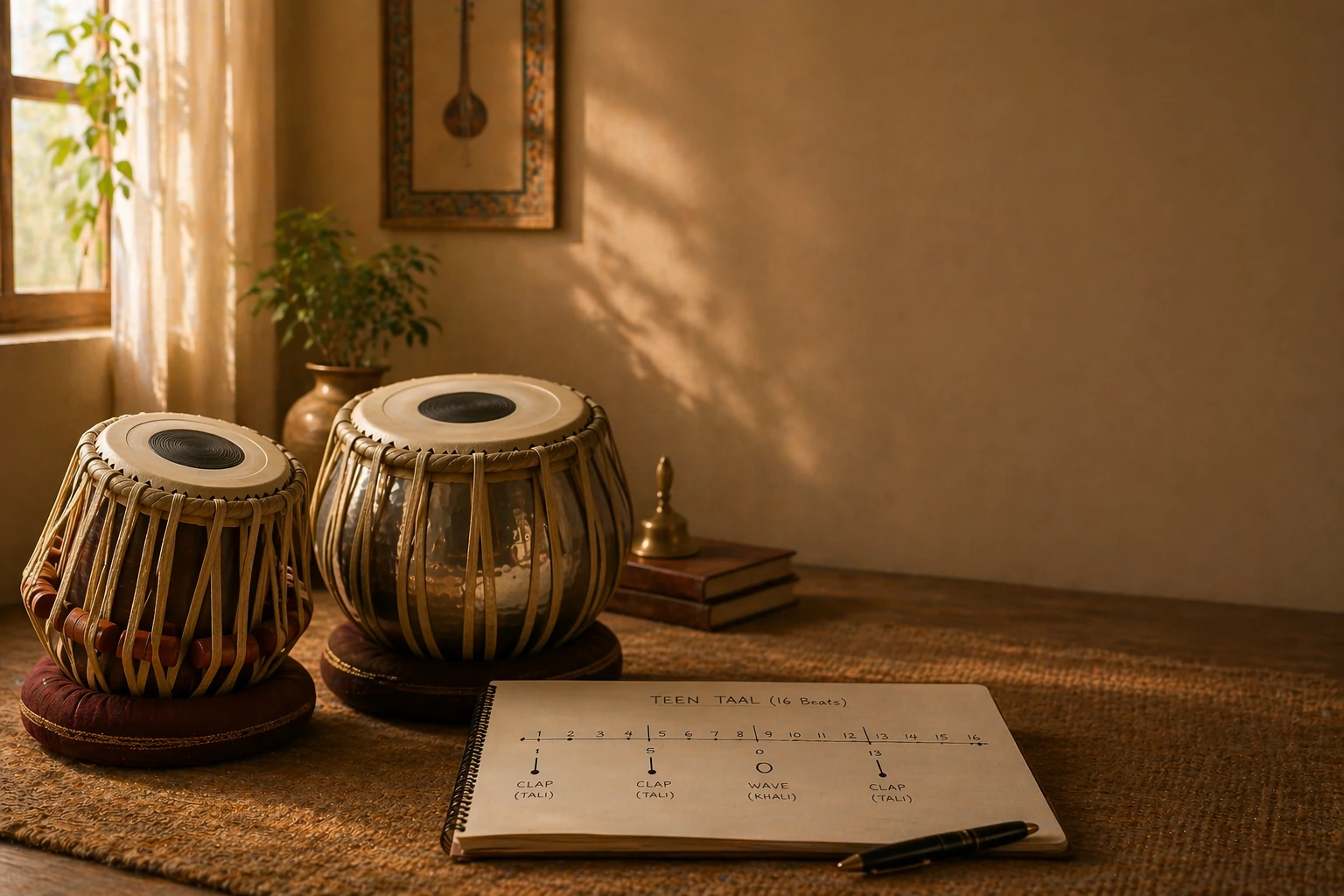
Taal Without Fear: How to Feel the Cycle Instead of Counting Blindly
Taal becomes much easier when students stop treating it like math homework and begin to feel the recurring cycle of movement and stress.

How to Start Riyaaz Without Overcomplicating It
A practical starting point for students who want to build a daily practice habit without turning music into a burden.